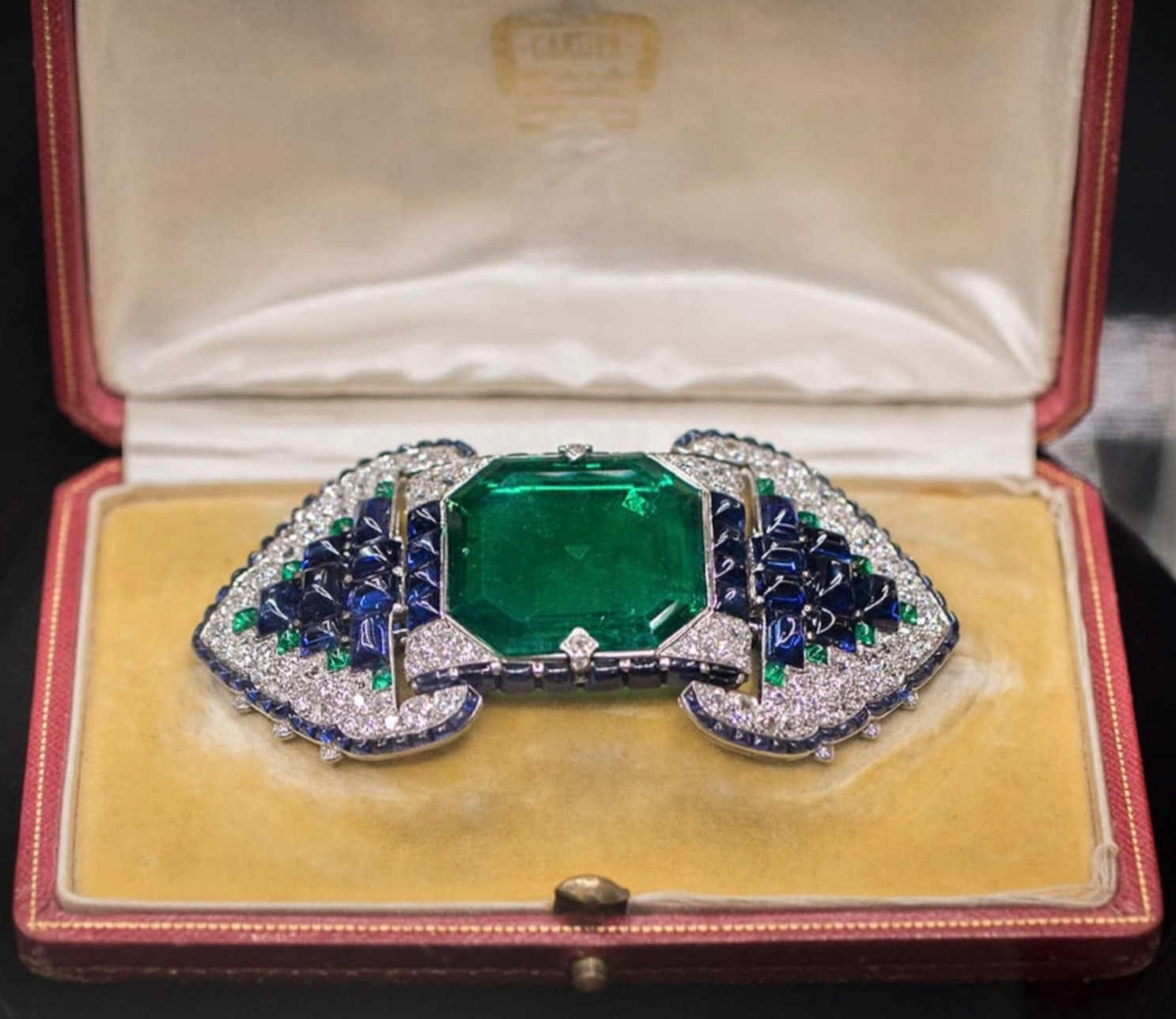
We are grateful to the Cartier Archive for having provided the precise date of manufacture of this stunning brooch: 1922. The jewel was manufactured at the beginning of the decade universally associated with Art Deco and shows how the elements characterising the style were already fully fledged at Cartier well before the seminal 1925 Paris Exposition des Arts Décoratifs et Modernes which gave its name to the style.
Exotic influences in a quintessentially Art Deco jewel
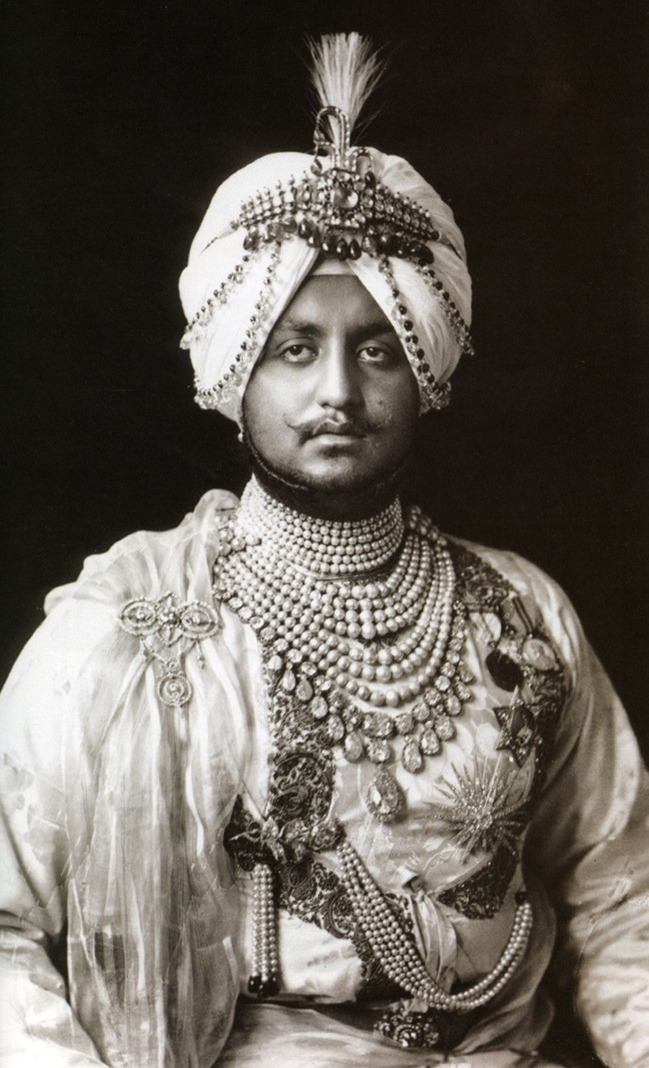
The central Colombian emerald weighing 38.71 carats, of a very fine quality, was almost certainly originally set in a Mughal jewel, probably a sarpech – the ornament worn by high ranking Hindu, Sikh and Muslim princes on the front of their turbans. 16th century sarpechs were single units but in the 18th century the design was enhanced through the addition of two side elements, as seen in the Cartier jewel here.
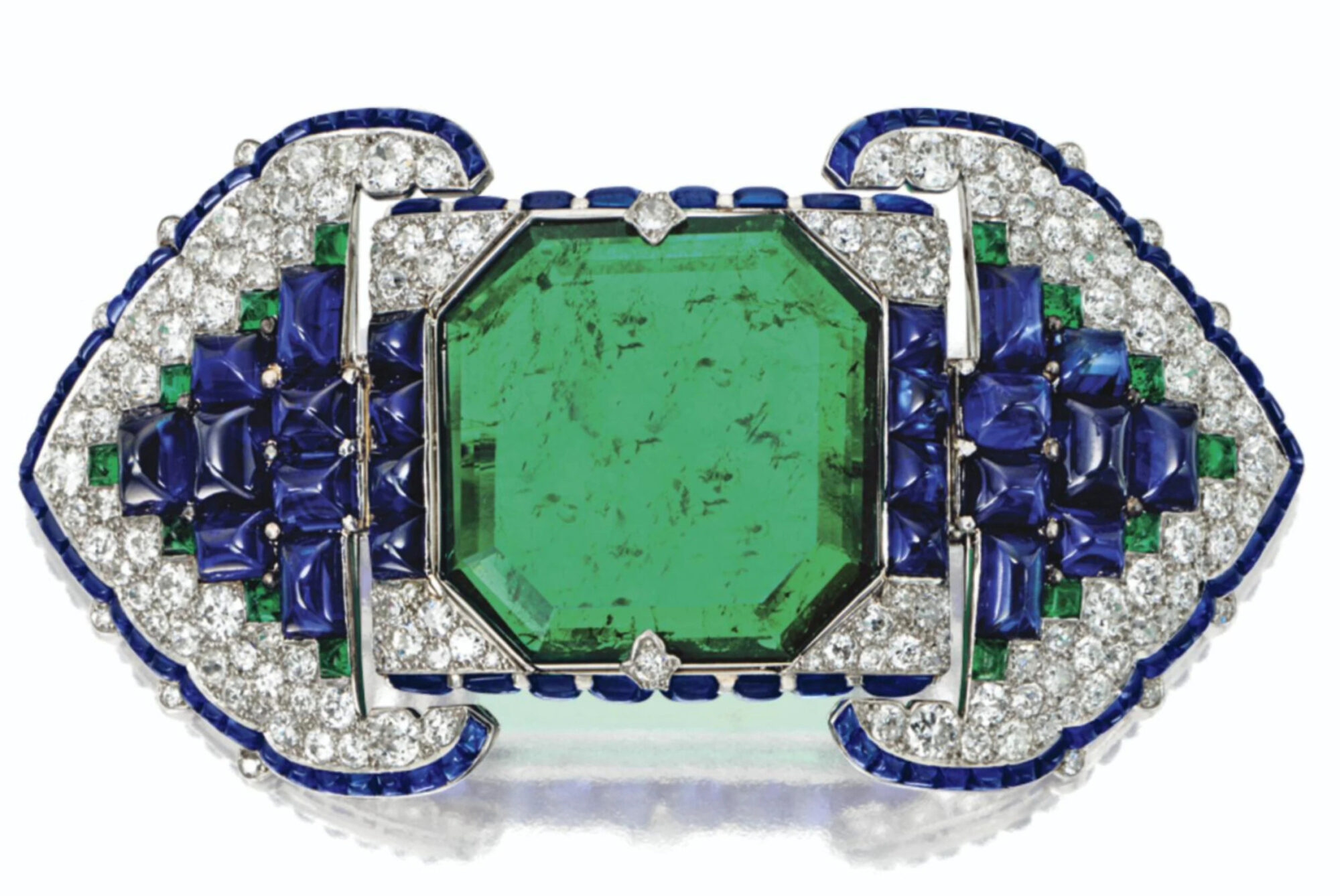
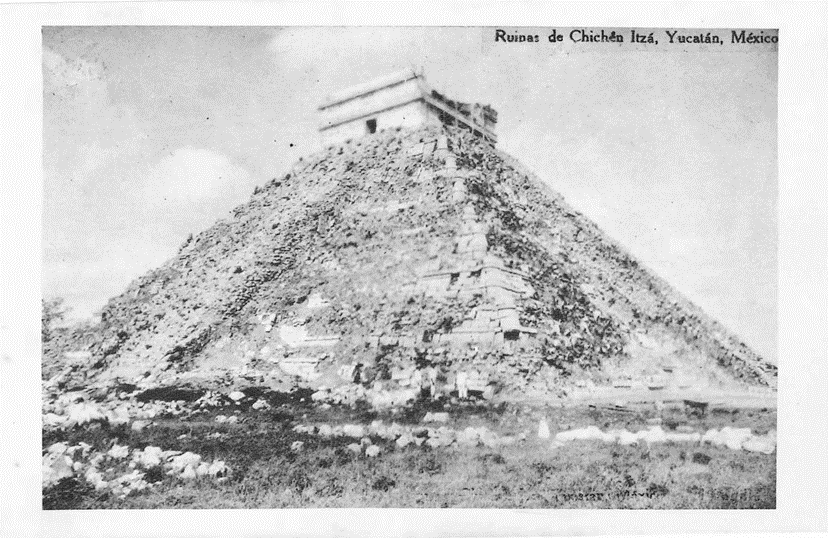
The emerald is flanked by triangular motifs, reminiscent of Mesopotamian ziggurats and Central American stepped pyramids, as seen in the image below of the Temple of Kukulcán, Chichén Itzá, Yucatan, Mexico, set with calibré-cut ‘buff top’ sapphires and emeralds in a colour combination first introduced at Cartier in the early years of the 20th century and extremely popular in the 1920s and early 1930s.
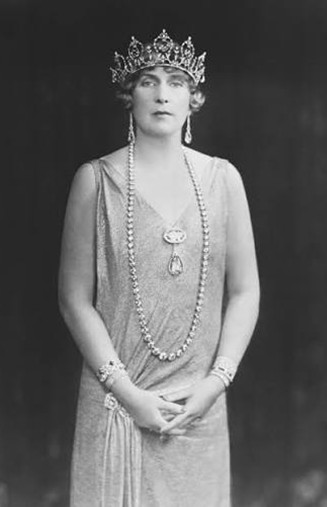
Given its size and weight, this buckle-shaped brooch would have been pinned either to the shoulder or the sash of the era’s highly fashionable, low-waisted ‘shift’ dress, as seen worn in the image below of Victoria Eugenie of Battenberg.