The magnificent jewels of Zurbarán | National Gallery, London

Several of the works by Spanish artist Francisco de Zurbarán (1598-1664), currently on exhibition at the National Gallery, depict female saints and these subjects were amongst Zurbaran’s most popular compositions. Zurbarán took an unswerving approach to their presentation, they are dressed in the fashions of his day accompanied by their own symbols, and thereby the required religious messages were delivered, clothed in a familiar sartorial style to resonate with contemporary audiences. We were particularly intrigued by the jewellery worn by three of Zurbarán’s saints and here we look at the context in which he was working.

Zurbarán was the son of a haberdasher, growing up amidst fabrics and trims and this environment is often cited when his remarkable skill in capturing textiles and drapery is considered. However, there are no accounts of Zurbarán discussing the influences in this regard, but it is recorded that as a child he drew in charcoal and given his artistic gifts in 1614, aged sixteen, he went to Seville to study in the studio of the painter Pedro Díaz de Villanueva
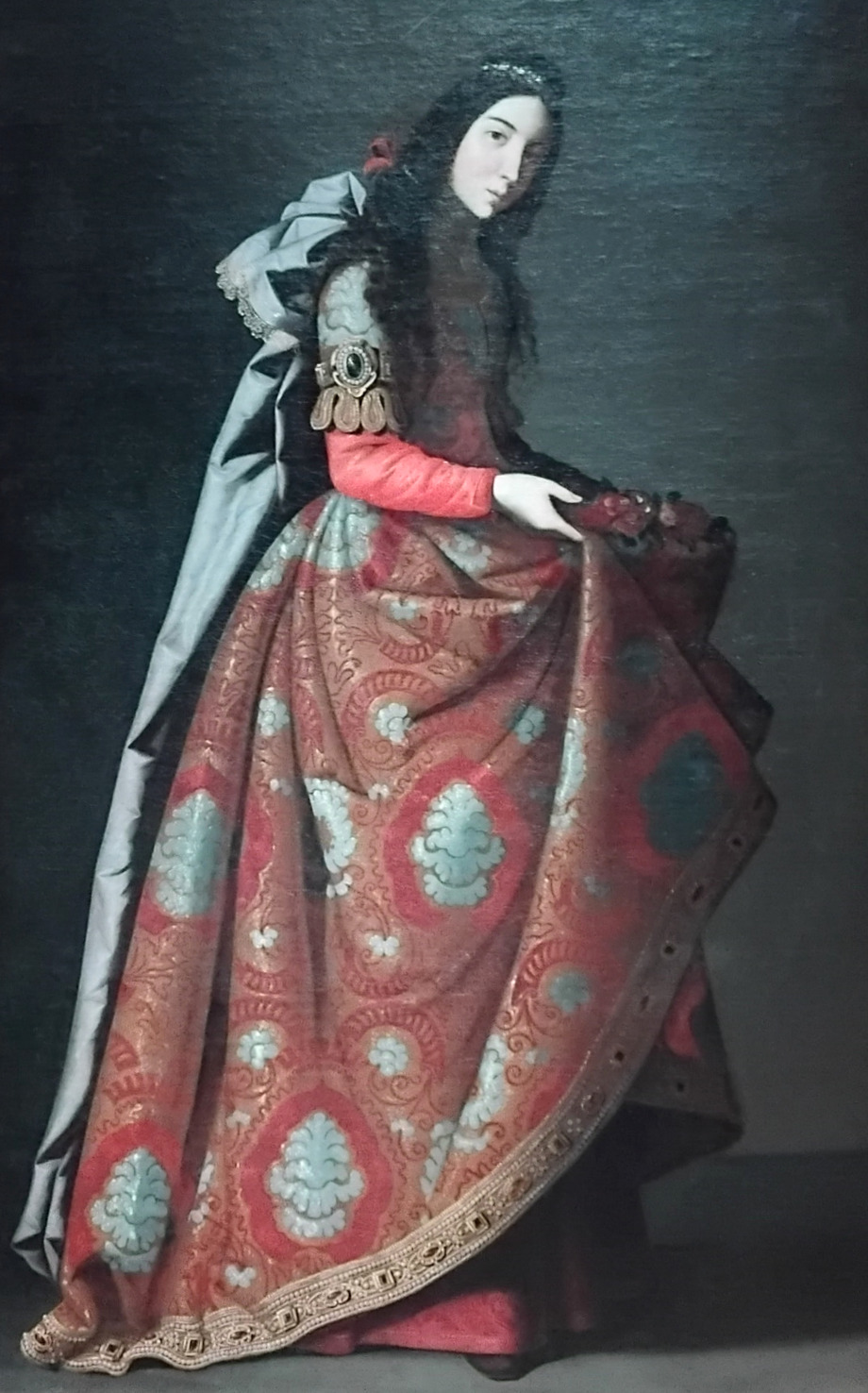
Francisco de Zurbarán, Saint Casilda, circa 1635, oil on canvas

Artists working in early 17th century Spain tended to receive commissions from two sources: the Church, and the institutions linked to it, and the Crown. Paintings with religious themes were crucial during the Counter-Reformation, and despite the control exerted by Church rectors over subjects and their portrayal working for the Church was a useful source of income and provided valuable exposure in prestigious institutions for the artist.

From 1626 Zurbarán produced paintings for religious establishments in Seville, the first came from the Dominican monastery San Pablo el Real and entailed producing twenty-one paintings over eight months, fourteen of these documenting the life of Saint Dominic – this commission was to establish Zurbarán as a painter. During the Counter Reformation seventy-three convents were founded in Seville, with so many large and soaring interior spaces to be filled the city became a magnet for a talented group of artists and sculptors. In 1629 Zurbarán was invited by the Elders of Seville to relocate permanently there, his work was by now highly regarded and his association with Seville would boost its profile. Zurbarán’s sojourn in Seville led to a prolific phase in his career, and he was appointed painter to King Philip IV (r. 1621-1665) in 1630, the monarch was known for his ‘true patronage’ of painters and the arts.

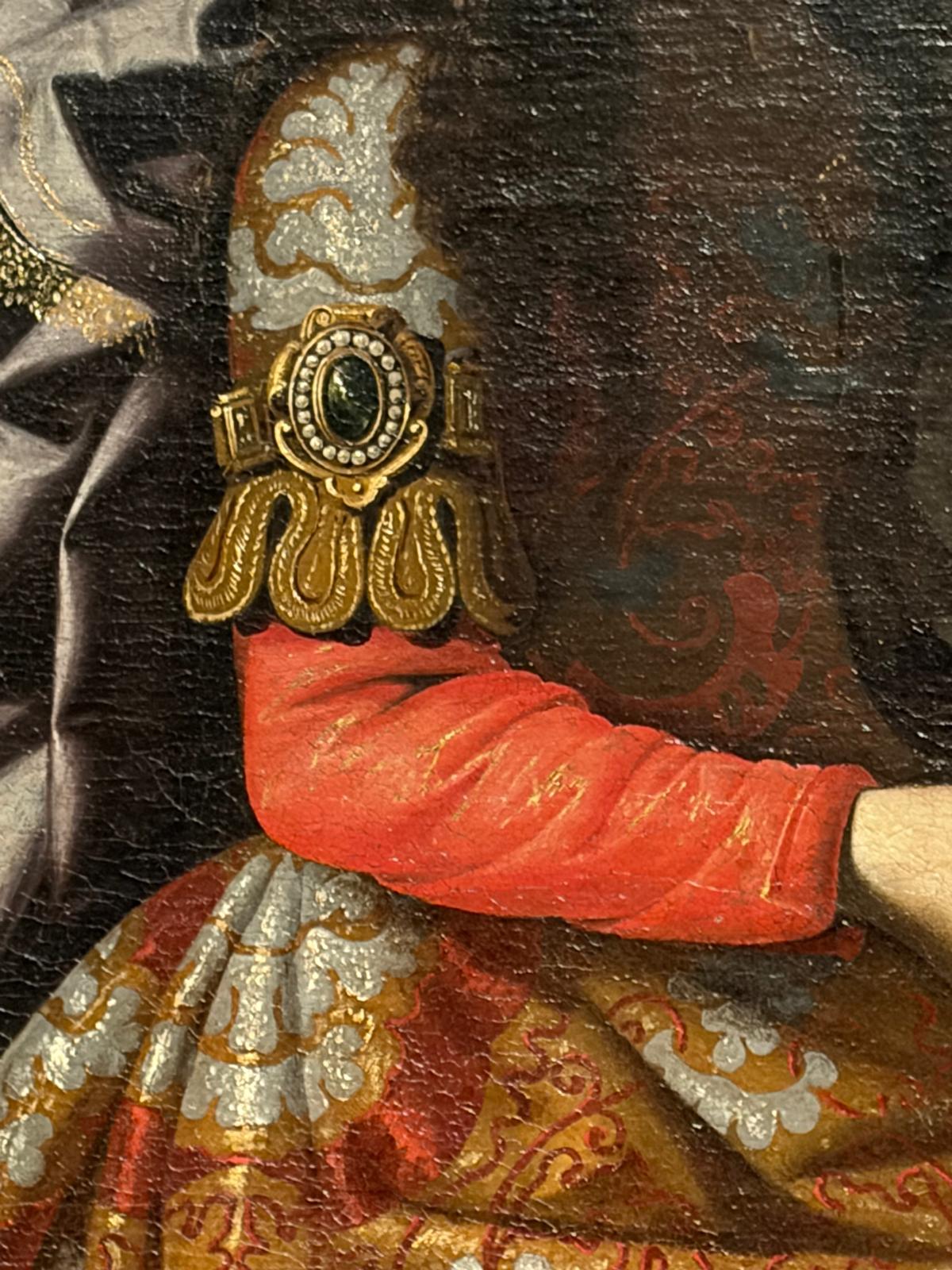
Saint Casilda's gold, gem and pearl armlet

Saints Casilda, Apollonia and Elizabeth of Portugal, dating from 1635-1640 when Zurbarán was residing in Seville caught our attention.

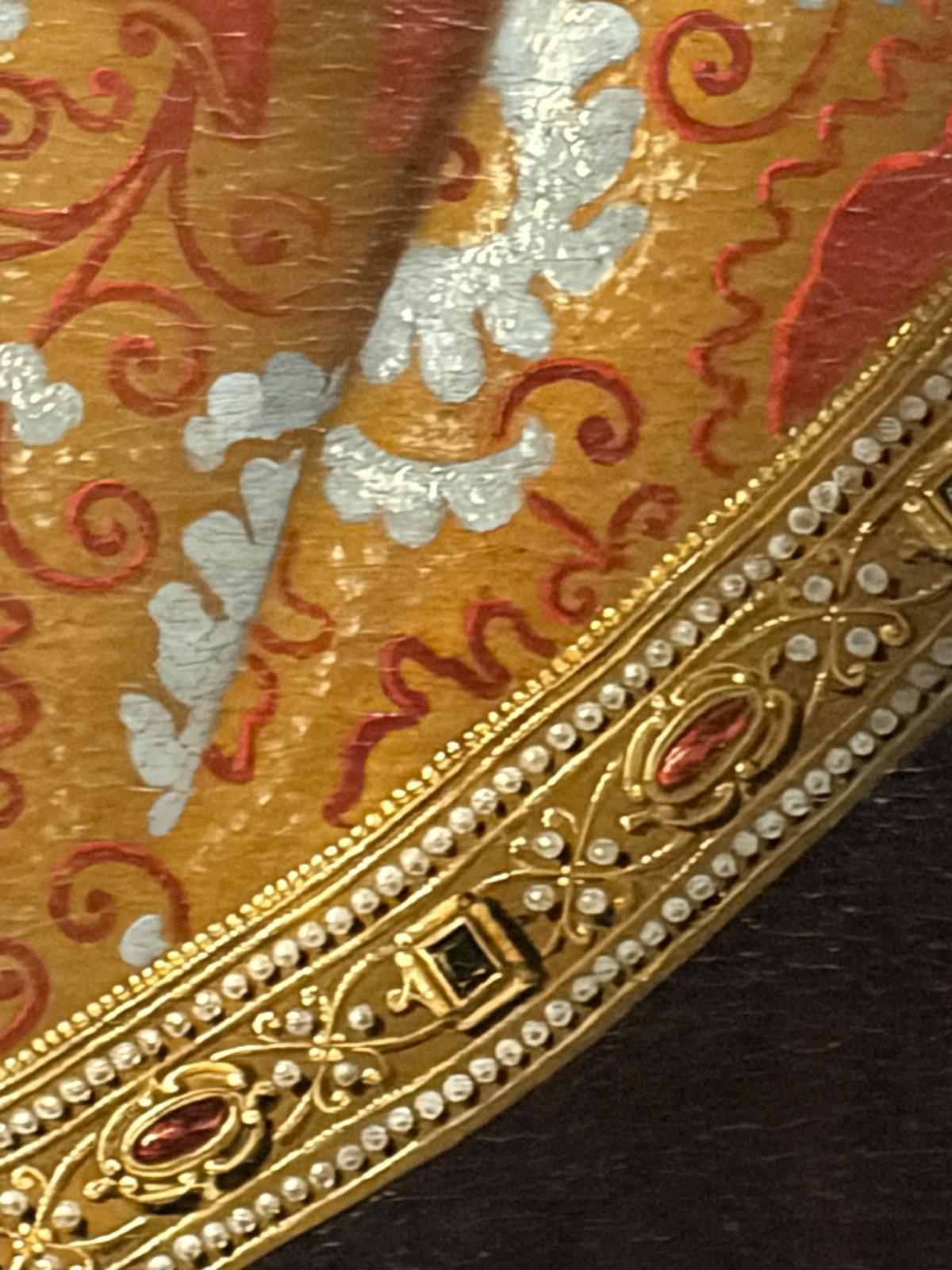
Saint Casilda was probably commissioned by the Convento de la Merced Calzada, she would have been a relevant subject given the Convent’s founders’ drive to save Christians held captive. Casilda was a 10th century princess and Christian convert, she was caught supplying bread to her father’s Christian prisoners which when revealed miraculously turned into roses. She wears a gold crown set with pearls, and the luxurious, jewelled hem of her heavy gold, crimson and white brocade gown runs diagonally across the canvas, it dominates the painting. Casilda’s red sleeve draws us to a tightly fitted gold armlet on her right forearm, in intricate gold filigree and with a dark, large oval stone at its centre, circled in pearls.

The extravagant hem of Saint Casilda's gown, set with gold, gems and pearls

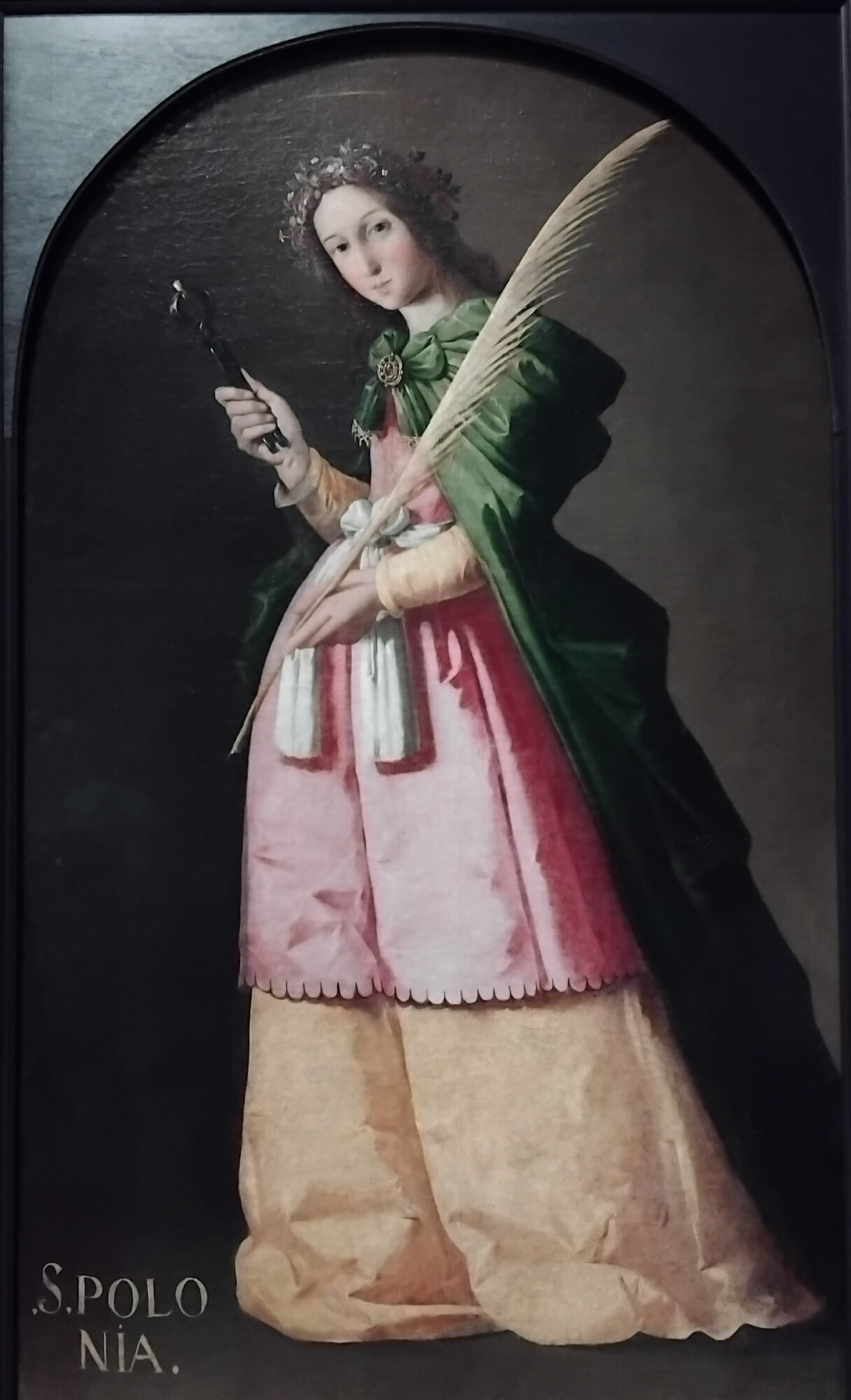
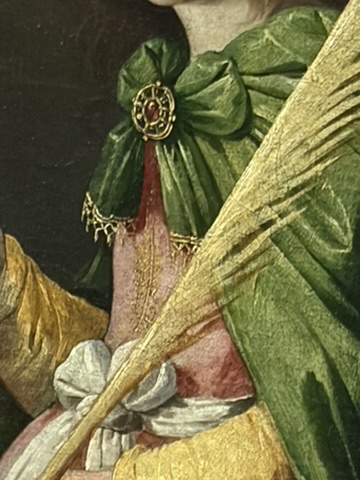
Saint Apollonia is possibly from a group of paintings displayed at the high altar in the currently named Church of the Convent of San José, Seville. She holds a pair of black iron pincers which grip a bright white tooth, and during a violent backlash against Alexandria’s Christian residents, circa 248, Apollonia, a deaconess, lost all her teeth. She subsequently took matters into her own hands and threw herself onto a bonfire which had been prepared to force her to renounce her faith. Apollonia wears the finest of silks, one can almost hear the rustle of her long skirt, and a large gold gem-set brooch sits at the centre of a bow which secures her olive-green cape. She carries a palm frond in her left (unadorned) hand – symbolising victory, triumph and eternal life. Apollonia’s overall poise and serenity go hand in hand with her attire and the use of a single bold jewel, which is both decorative and functional.

Francisco de Zurbarán, Saint Apollonia, circa 1636, oil on canvas, and below a detail, featuring the brooch set at the centre of Apollonia's cape

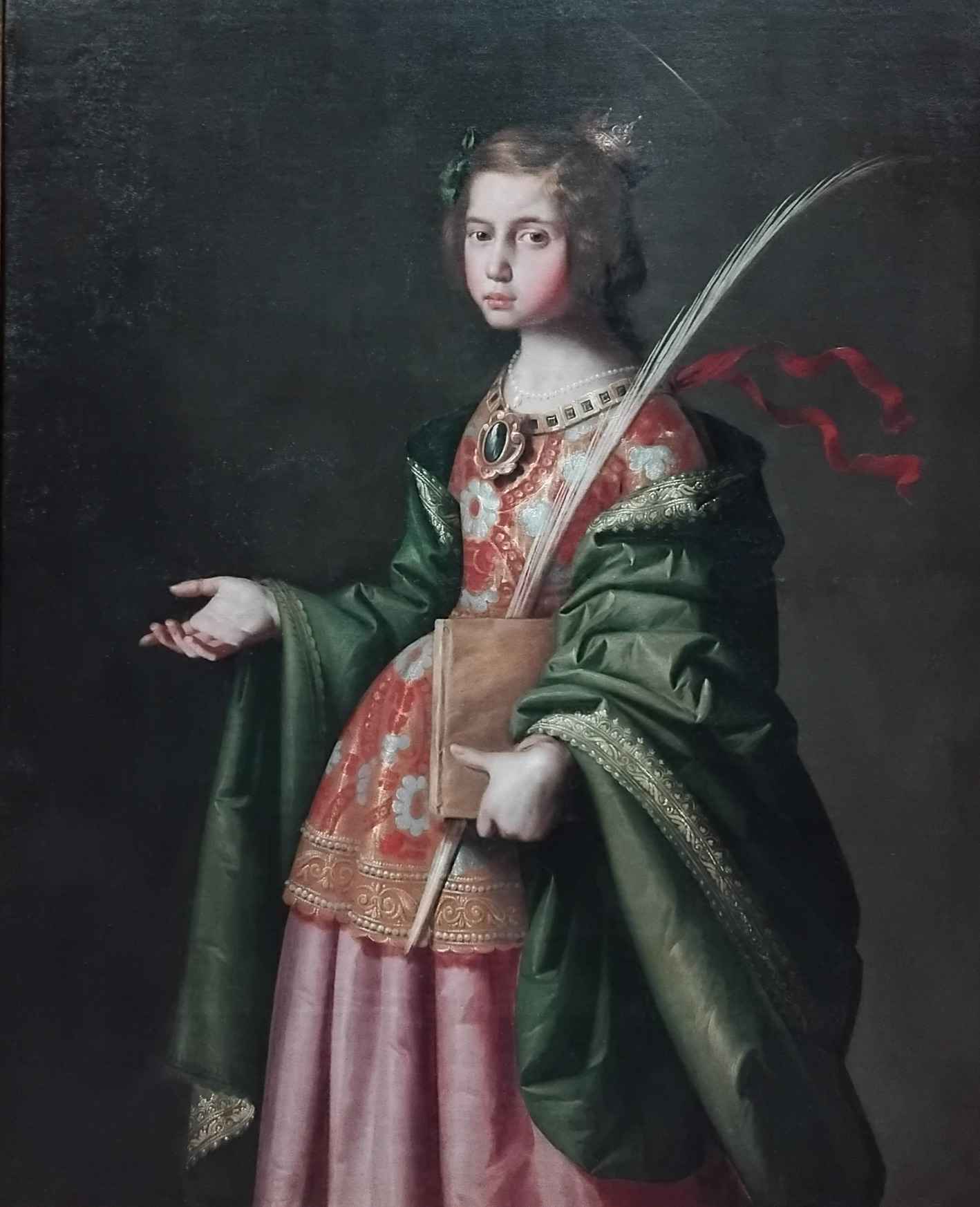
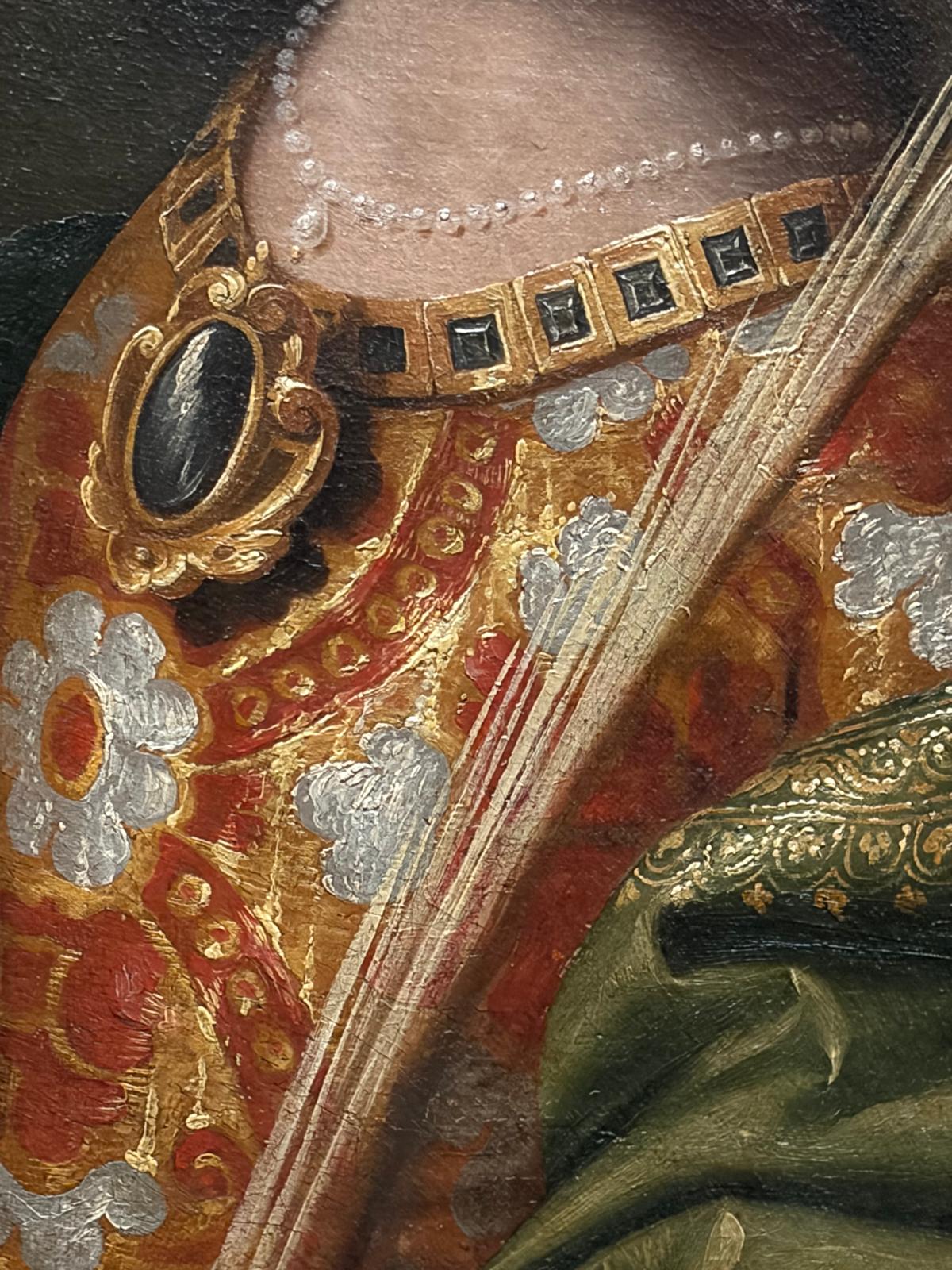
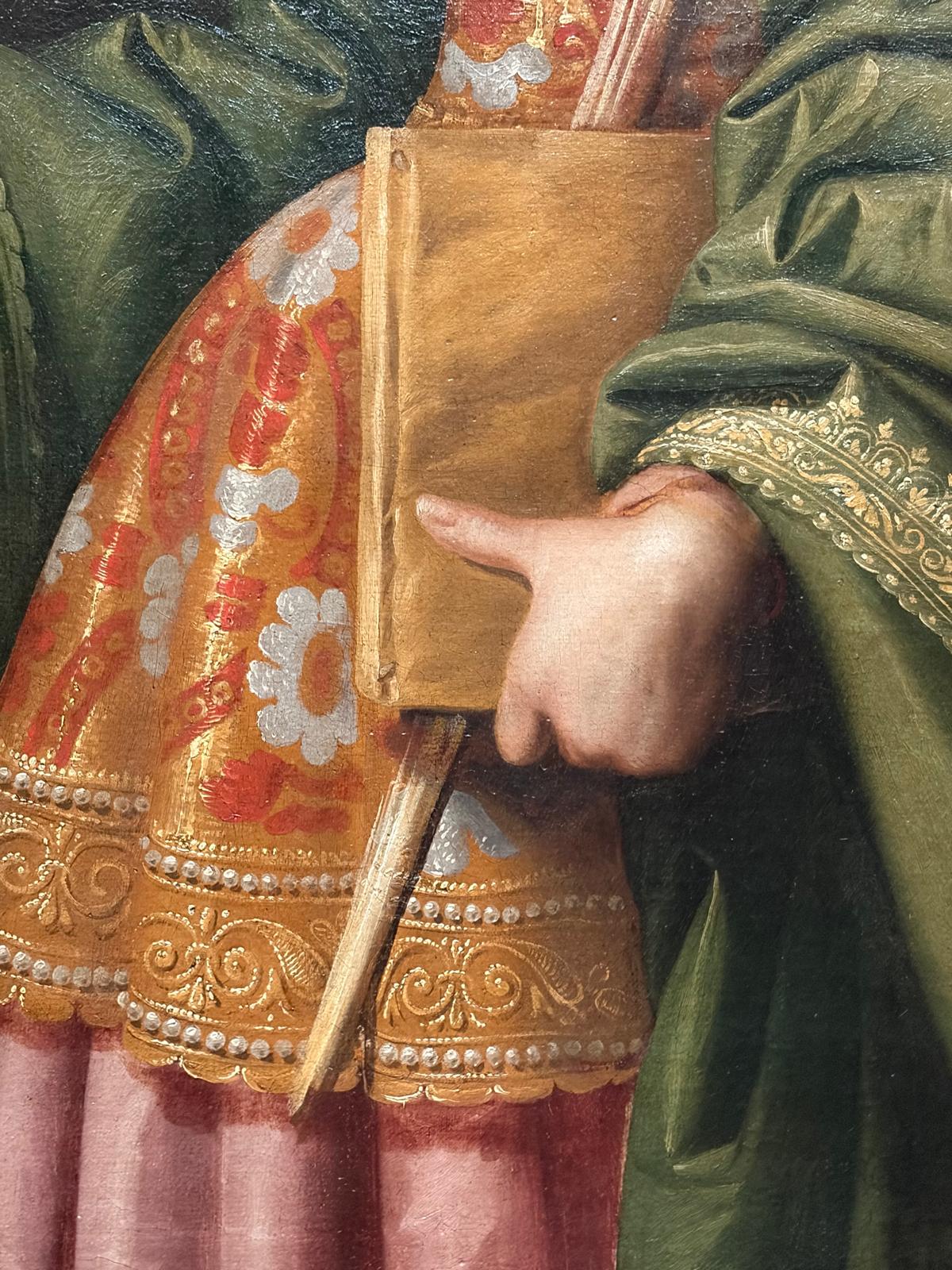
Saint Elizabeth of Portugal was painted just a few years after the former Queen was canonised in June 1626 by Pope Urban VIII. Elizabeth was the wife of King Denis of Portugal (r. 1279-1325) and as Queen she continued the religious practices she had observed from her childhood, fasting and devotion to the poor and sick, and later as Dowager Queen she carried on her good works in obscurity. Elizabeth was known for her modest dress and self-effacing conversation, however Zurbarán presents her wearing many items of jewellery: a crown, a pearl necklace with a large pearl drop and a large gold ornament set with an oval gem or engraved stone is suspended from a necklace of gold square links. The links are possibly set with diamonds (throughout the Renaissance and up to the mid-17th century, diamonds were often rendered with a glossy black appearance due to their early table, rose cuts and closed settings).  The double row of pearls on the gold embroidered hem of her ornate floral tunic and her cloak with its extravagant gold and pearl trim also contribute to the queenly presentation of Elizabeth, although a slight reserve can be seen in her expression.

Francisco de Zurbarán, Saint Elizabeth of Portugal, circa 1640, oil on canvas

Very few jewels from Zurbarán’s era have survived – over the intervening centuries gold settings were melted down and precious gem stones extracted for use in new, au courant pieces. Several competing factors were at work in the production of jewellery in Spain in the first half of the 17th century. Raw materials were available to the country through its extensive colonial networks, Spain’s treasure fleets carried large quantities of precious materials from Latin America which were channelled through the port of Seville. But despite the influx of these riches Spain’s economy was fragile, experiencing frequent state bankruptcies, declining manufacturing output and drops in population. The country struggled under an extremely rigid, inflexible social structure, the wealthy noble was largely exempt from paying tax and physical labour was disdained – both of which prevented productive economic reform. During the course of the 17th century Spain passed a number of sumptuary laws, these targeted the wearing of jewellery and personal adornment in an effort to curb the sense of moral decline, address the balance of payments (Spain’s wealthy classes favoured imported French luxury goods) and reduce economic strains. Major legislation was passed in 1623 by Philip IV but the strict wardrobe regulations were frequently set aside in the lead up to and on the occasion of state or diplomatic visits. Enforcement was challenging, and those with the requisite funds simply factored in the payment of fines when planning their attire and accessories.

Saint Elizabeth's pearl necklace and gold ornament suspended from a necklace of square gold links

Zurbarán certainly worked during the period of sumptuary law enforcement but perhaps we need to reflect that his saints are not directly representative of 17th century rules. Our saints highlighted here were significant figures during their respective ages and their portraits, likely displayed at some distance and height from the viewer and in poor light, probably required the assistance of lavish jewellery to complement their superb finery, so beloved of and rendered by the artist.

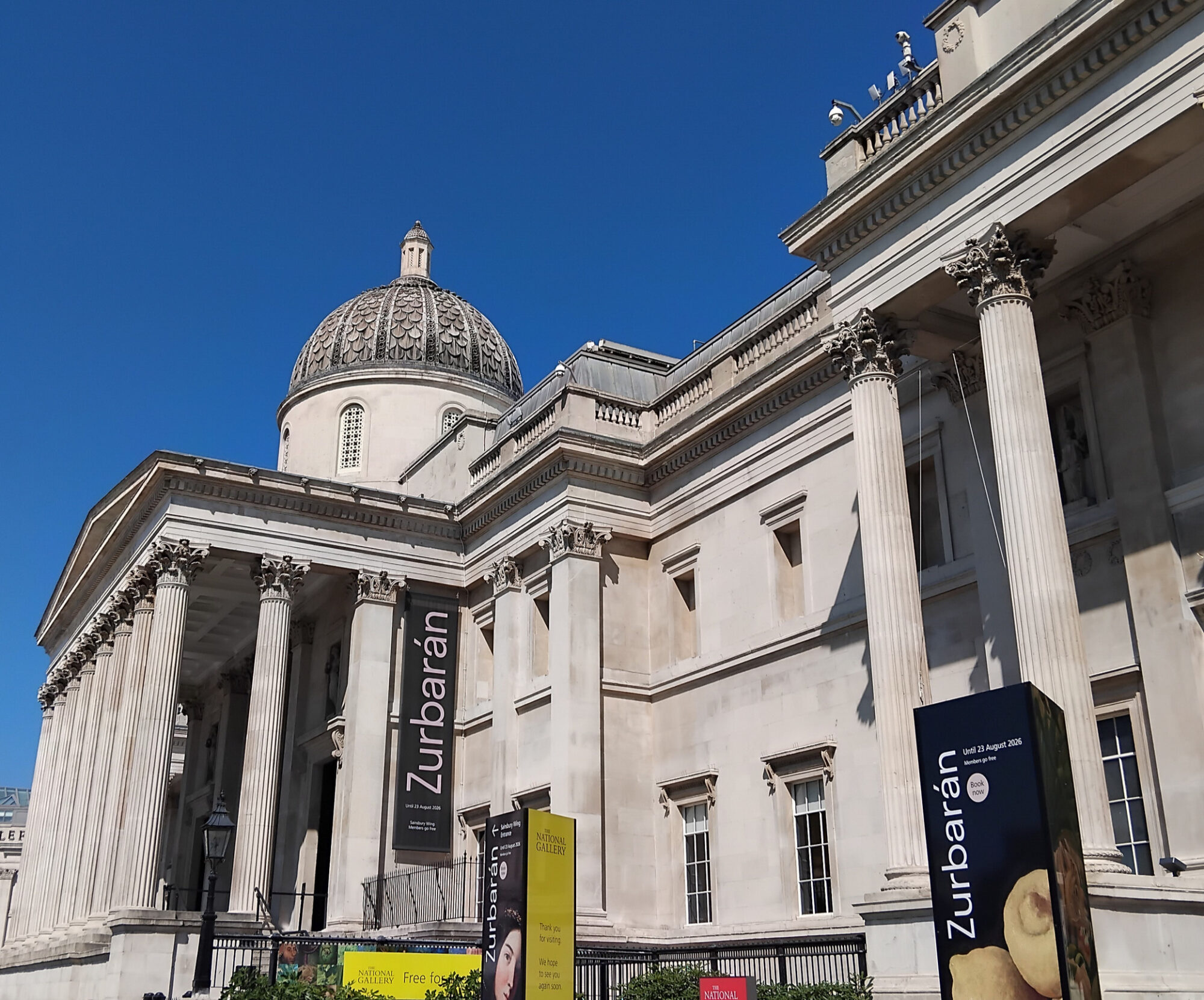
Zurbarán | On view at the National Gallery, London until 23 August 2026 | Find out more

Detail from Saint Elizabeth of Portugal featuring the hem of her tunic and the trim of her cape both featuring gold embroidery bordered in pearls